Moving from the Bahamas to Panama: an honest comparison
Over the past two years we have seen a steady increase in enquiries from Nassau — professionals, retirees, and families who have built their lives in New Providence and are now, carefully, looking at what else might work. This is the longer version of what we tell them.
The pattern usually starts the same way. You moved to the Bahamas — or you grew up there — and for a long time it made complete sense. Nassau is warm, it is close to the US, there is no income tax, the community is tight-knit in a way that larger places cannot replicate, and on any given weekend you can be on a boat in the Exumas watching nurse sharks circle in water so clear it barely looks real. It is a genuinely beautiful place to live.
But over the past several years, a set of pressures has been building. Hurricane Dorian in 2019 was not just another storm — it was a Category 5 event that devastated Abaco and Grand Bahama and left a psychological mark across the entire archipelago. The annual hurricane season now carries a weight it did not carry before, and NOAA climatology data shows the central Bahamas sits squarely in the most active corridor of the Atlantic hurricane belt. The introduction of VAT in 2015, now at 10%, added a new cost layer to an already expensive import-dependent economy. Healthcare on-island remains limited for anything beyond routine care. And the cost of daily life in Nassau — groceries, housing, insurance, school fees — has continued to climb without a corresponding improvement in infrastructure or services. None of these is a dealbreaker on its own. Together, they push people to look.
The shape of the comparison
Panama is not a Caribbean island and does not pretend to be. It is a continental Latin American country with a modern capital city of 1.5 million people, a deep commercial infrastructure built around the Canal and the Colon Free Zone, and a cost base that reflects a mid-income economy rather than a small archipelago dependent on imports and tourism. Both places share key practical advantages: US dollar economies (the Bahamian dollar is pegged 1:1 to the USD; Panama has used the USD since 1904), no personal income tax on locally earned income in the Bahamas and a territorial tax system in Panama, warm climates, and established expat communities. But the texture of daily life is fundamentally different.
What follows is what we actually tell Bahamas clients during their first conversation with us. It is not a sales document. If any of these trade-offs feels wrong for your situation, that is useful information to have now rather than after you have started packing.
Cost of living: cheaper than Cayman, still expensive
Nassau is expensive by any measure, though generally 15 to 25% cheaper than Grand Cayman for most household line items. Panama City is cheaper again — meaningfully so. For a family of four living in a good neighborhood, shopping at quality supermarkets, and sending children to a strong international school, the all-in monthly cost in Panama is typically 35 to 50% lower than the equivalent life in Nassau. For a family that adapts more fully to local options, the gap widens further.
Housing is the largest single difference. A three-bedroom apartment in a desirable Nassau neighbourhood — Cable Beach, Lyford Cay fringes, eastern New Providence — rents for US$4,000 to US$6,500 per month. A comparable apartment in Costa del Este, Punta Pacifica, or Clayton in Panama City runs US$2,200 to US$3,500. You get more space, newer finishes, and better building amenities for significantly less. Independent data from Numbeo's Panama City vs. Nassau comparison and Mercer's annual cost-of-living survey confirm the pattern consistently.
Groceries are 30 to 45% cheaper in Panama. In Nassau, nearly everything on a supermarket shelf has been shipped in, and the 10% VAT applies on top. Panama grows its own produce, has competitive retail chains (Riba Smith, El Rey, PriceSmart), and benefits from its position as a continental logistics hub. Dining out at comparable-quality restaurants is roughly 35 to 45% cheaper. Private school tuition at the top international schools in Panama (ISP, Metropolitan School of Panama, Balboa Academy) is generally 10 to 20% lower than the leading Nassau options, though the gap is narrower than for other categories.
The most important thing Bahamas clients need to understand is that much of what they have been paying for in Nassau is the structural cost of being a small island economy, not the cost of a high quality of life. Panama delivers comparable or better quality across most categories at a materially lower price point because it is a continental economy with real infrastructure and competitive markets.
Healthcare: the conversation nobody postpones twice
Healthcare is often the issue that moves a conversation from hypothetical to serious. In Nassau, Princess Margaret Hospital is the main public facility — it handles volume but is frequently overcrowded and under-resourced. Doctors Hospital is the leading private option and provides decent care for routine and moderately complex cases, but specialist depth is limited. For advanced cardiology, oncology, complex orthopedics, neurology, or high-risk obstetrics, Bahamians have historically flown to Miami. The flight is short — about an hour — but the process involves coordination, cost, stress, and time away from family. It is a system that works until you need it urgently.
Neither Princess Margaret nor Doctors Hospital holds Joint Commission International accreditation. In Panama City, Pacifica Salud (formerly Hospital Punta Pacifica) is JCI-accredited and affiliated with Johns Hopkins Medicine International. The specialist bench is deeper than what Nassau offers: cardiology, oncology, orthopedics, neurology, and high-risk obstetrics are all available in-city from credentialed specialists, many of whom trained at US or European teaching hospitals. Other strong private hospitals include The Panama Clinic, Hospiten Paitilla, and Hospital Nacional.
The honest caveats are similar to what we tell any client. For the rarest conditions — certain uncommon cancers, highly specialized pediatric surgery, experimental treatments — Panama is still a referral jurisdiction to Miami or Houston. And the public health system in Panama, which most of our clients never interact with, is weaker than the private one. With international health insurance from Bupa Global, Cigna Global, Allianz Care, or ASSA, you will almost certainly remain within the private system. But for the vast majority of medical needs, the depth available in Panama City without boarding a plane is a material upgrade over what Nassau provides.
Schools: more options, more curricula, more depth
Nassau has several quality schools. St. Andrew's International School offers a British-style curriculum and is well-regarded. Lyford Cay International School serves the western end of the island with a smaller, community-oriented environment. Queen's College has deep local roots. These are credible options, but the ecosystem is limited — if a particular school is not the right fit for your child, the alternatives are few.
Panama City's international school landscape is broader and deeper. The International School of Panama (ISP) runs an IB programme and is widely considered the strongest international school in the country. Balboa Academy offers an American curriculum with an AP programme and a well-established expat community. The Metropolitan School of Panama is newer, IB-focused, and building a strong reputation. Colegio Brader, also IB, is historically the choice of established Panamanian families. Academia Interamericana de Panama (AIP) in Costa del Este suits families who want proximity to that neighbourhood. Year groups are larger — typically 60 to 120 students depending on school and year — which means more peers, more subject options at secondary level, and stronger sports and arts programmes.
What you will not find in Panama is the very small cohort size that some Nassau schools offer. If your child thrives in a class of twelve, a class of eighty will be an adjustment. We recommend engaging admissions offices six to nine months ahead of a planned move, particularly for popular primary school year groups where waiting lists are common.
Residency: straightforward, with good options for Bahamians
Bahamas residents moving to Panama typically pursue one of three visa routes. The Pensionado visa is available to anyone with a qualifying lifetime pension (US$1,000 per month plus US$250 per dependent). The Friendly Nations Visa — and this is worth noting — is available to citizens of the Bahamas, which is on the qualifying list. This visa is designed for professionals and investors from countries with which Panama maintains friendly diplomatic and economic ties, and it provides a practical path to permanent residency. The Qualified Investor visa requires a larger financial commitment but offers a faster timeline and is the route chosen by clients who want permanent residency without the constraint of a specific employer or pension.
In all three cases, the process is managed by a Panamanian immigration lawyer (we work with two firms we trust), requires legalized documents from your country of origin, and takes anywhere from several months to about a year depending on the route and the quality of your paperwork. The authoritative source on current requirements is the Servicio Nacional de Migracion de Panama. What we add is coordination — making sure residency, school admissions, housing, and banking all move in step rather than each one blocking the others.
Tax: similar in principle, different in detail
The Bahamas has no income tax, no capital gains tax, and no wealth tax. What it does have, since 2015, is a 10% VAT that applies broadly to goods and services — a cost that is felt daily in a high-import economy. Panama has a territorial tax system: income earned outside Panama is generally not taxed by Panama, and there is no wealth tax or inheritance tax. Panama has a 7% ITBMS (its version of VAT), which is lower than the Bahamas' rate and applied to a narrower base of goods and services.
For most Bahamas clients — whose financial lives are already structured around zero-income-tax residency — the practical tax difference between the two jurisdictions is smaller than people assume. The real questions are always about your tax obligations in your country of citizenship or any jurisdiction where you have historical ties. That requires a qualified cross-border tax advisor, not a relocation firm.
Our team includes tax advisory expertise, but to maintain independence we refer clients to reputable cross-border specialists for their specific situation. For general background, the IMF country profile for Panama and the OECD tax centre are reliable starting points. Anyone who gives you a definitive answer about your tax position based on a short conversation is not someone you should trust with your financial structuring.
Currency: the easiest part of the move
The Bahamian dollar is pegged 1:1 to the US dollar, and both currencies circulate freely in Nassau. Panama uses the US dollar as its official currency — there is no local currency to convert. For Bahamas residents, this is one of the simplest transitions imaginable. Your bank accounts, your pricing instincts, your mental math — none of it changes. There are no exchange rate surprises, no conversion fees, no currency risk. It is one fewer thing to worry about during a move that involves plenty of other adjustments.
The quieter trade-offs
Beyond the spreadsheet comparisons, there are things that will determine whether a move from Nassau to Panama actually feels right after eighteen months.
The Bahamas is a community. Panama is a country. That is a bigger shift than most people prepare for.
You lose the island intimacy. Bahamian culture is strong, distinctive, and deeply communal. Junkanoo is not just a festival — it is a thread that runs through the social fabric of Nassau life. Family Island weekends — Harbour Island, the Exumas, Eleuthera — are part of how people in Nassau decompress, reconnect, and define their identity. The tight-knit feeling of knowing your neighbours, seeing familiar faces at Arawak Cay, watching your children grow up alongside the same group of kids — that is real, and Panama City, at 1.5 million people, cannot replicate it. Specific micro-communities within the city (Costa del Este, Clayton, the expat networks in Coronado) create a version of it, but it is a version, not the thing itself.
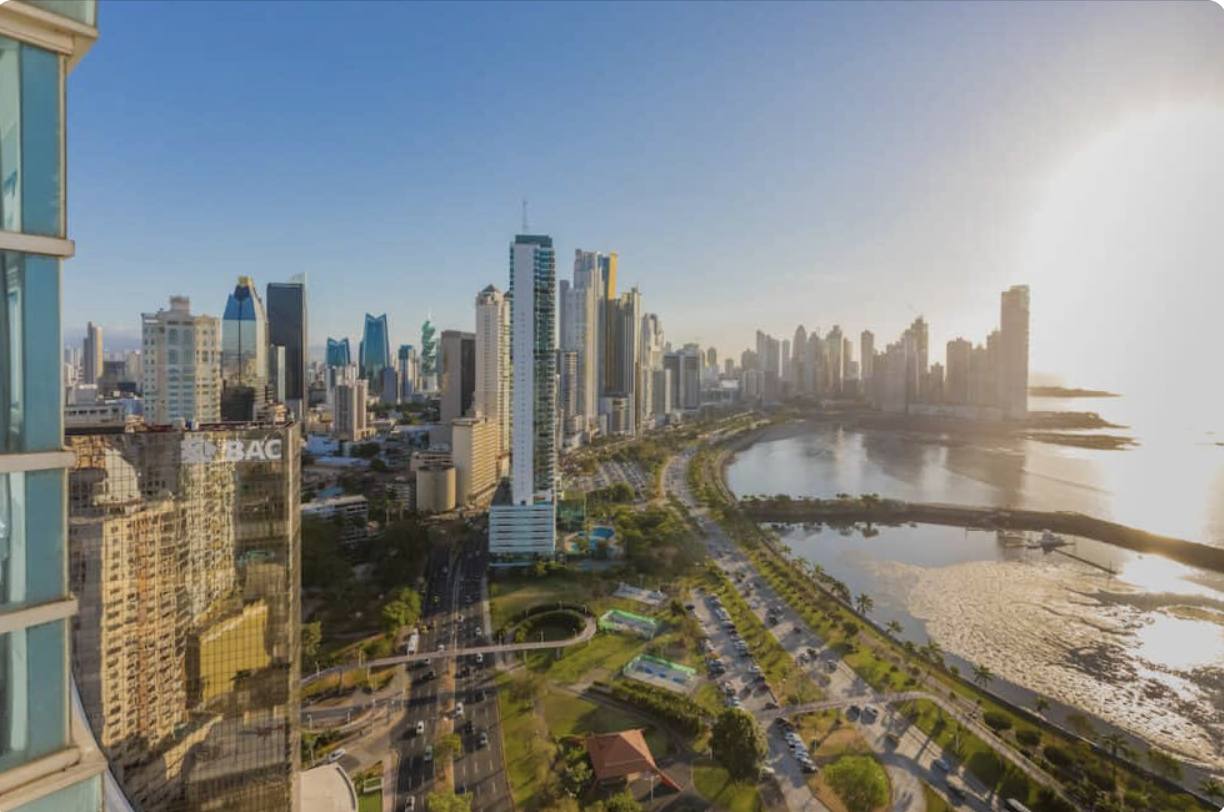
You lose the water. This deserves its own line because it matters more than people expect. The Bahamas has some of the most extraordinary ocean water in the world — the clarity, the colour, the proximity to daily life. Swimming, boating, and the sea in general are not weekend activities in Nassau; they are part of the texture of ordinary days. Panama City's waterfront is dramatic but the water itself is not swimming water in the city. The nearest good Pacific beaches are thirty to sixty minutes away. Clients from the Bahamas should either plan for a part-time coastal presence (Coronado, Punta Barco, Pedasi) or accept that the ocean becomes a weekend destination rather than a daily companion.
You gain scale and depth. In Panama you can drive an hour to a cool mountain town in El Valle or Boquete, forty-five minutes to a Pacific beach, or take a domestic flight to Bocas del Toro on the Caribbean coast. The country has geographic, cultural, and economic depth that a small archipelago — however beautiful — cannot offer. For dual-career families, Panama City has a real professional ecosystem: regional headquarters, financial services, logistics, consulting, and legal work that provides genuine career optionality beyond the tourism-and-finance concentration of Nassau.
You gain resilience. Panama has not had a direct hurricane strike in modern recorded history. It sits below the hurricane belt entirely. For families who lived through or near Dorian, or who have spent years watching September forecasts with a knot in their stomachs, this is not a trivial consideration. It is, for some of our clients, the single factor that tipped the decision.
How to think about the decision
We are not neutral — we help people move to Panama, and we are straightforward about that. What we can say is that of the Bahamas clients we have worked with, a small number decided after their exploration visit that Panama was not for them, and we were glad they reached that conclusion before moving rather than after. The ones who have stayed report, at twelve and twenty-four months, that the biggest positive surprises were the healthcare depth, the cost savings, and the amount of actual city life available. The biggest adjustments were the traffic in Panama City, the loss of that distinctive Bahamian community feeling, and the distance from the ocean in daily life.
If you are at the point of seriously considering this, the next step is not another article. It is a conversation — forty-five minutes, free, with no follow-up unless you ask for one — and if it turns out Panama is not the right move for you, we will say so directly.
Sources & further reading
- Numbeo — Panama City vs. Nassau cost comparison: numbeo.com
- Mercer Cost of Living Survey — annual rankings: mercer.com
- Joint Commission International — accredited organizations directory: jointcommissioninternational.org
- Servicio Nacional de Migracion de Panama — visa categories: migracion.gob.pa
- IMF country profile — Panama: imf.org/en/Countries/PAN
- World Bank country data — Panama: data.worldbank.org/country/panama
- NOAA National Hurricane Center climatology: nhc.noaa.gov/climo
- OECD tax centre: oecd.org/tax