Moving from Barbados to Panama: an honest comparison
Barbados is one of the most livable islands in the Caribbean. It also has a ceiling — in healthcare, in career depth, in cost control — that becomes harder to ignore the longer you stay. This is the longer version of what we tell Barbados clients on the first call.
If you are reading this from Barbados, you are probably one of a few recognizable types. You may be an international business professional who arrived for a posting that extended itself. You may be a retiree who came for the climate and the civility and stayed for the community. Or you may be one of the growing number of remote workers who moved under the Barbados Welcome Stamp — the digital nomad visa that put the island on a different map during and after the pandemic. Whatever brought you, the reasons you are now looking elsewhere tend to follow a pattern.
Cost is the most common starting point. Barbados is expensive for the Caribbean, driven by import duties that inflate the price of almost everything that arrives by container. Healthcare beyond the routine is a genuine concern — specialist care often means a flight to Trinidad, Miami, or further. Hurricane exposure, while historically lower for Barbados than for islands further north, is no longer the reassurance it once was as climate patterns shift. And for professionals with ambition beyond the island, Barbados is a small market in a small economy. None of these is fatal on its own. Together, they create the kind of quiet, accumulating pressure that eventually makes people start searching.
The shape of the comparison
Panama is not another Caribbean island. It is a continental country with a genuine metropolitan capital, a population forty times larger than Barbados, and an economy built around logistics, banking, and regional commerce rather than tourism and offshore services. Both share certain practical advantages: stable governance by Caribbean and Latin American standards, warm climates, English widely spoken in professional settings (though Panama is Spanish-speaking and you will want to learn), and established pathways for foreign residents. Both sit outside the primary Atlantic hurricane belt — Barbados at its southern edge, Panama below it entirely with no direct hurricane strike in modern record (see NOAA climatology data).
The most important structural difference is currency. The Barbadian dollar is pegged 2:1 to the US dollar, so you are already thinking in USD. Panama uses the US dollar directly — no conversion, no peg risk, no friction. For anyone managing income or assets across borders, this is a practical simplification that compounds over time.
Cost of living: where the numbers actually land
Barbados is one of the more expensive places to live in the Caribbean, and most of that expense is structural rather than lifestyle-driven. Import duties on food and consumer goods are high. The domestic market is small, so competition is limited and prices stay elevated. A three-bedroom home in a good area of Bridgetown or along the West Coast rents for roughly US$2,800 to US$4,200 per month. The equivalent in Panama City — Costa del Este, Punta Pacifica, or Clayton — runs US$2,200 to US$3,500 per month, with materially more interior space and newer building stock in most cases.
Groceries are 30 to 45% cheaper in Panama across a comparable basket. Dining out at similar-quality restaurants runs roughly 35 to 45% less. Fuel is cheaper because Panama has regional refining access. Imported consumer goods and electronics arrive faster through Tocumen and the Colon Free Zone, at prices closer to US retail. Independent sources such as Numbeo's Panama City vs. Bridgetown comparison and Mercer's annual cost-of-living survey consistently place Bridgetown higher than Panama City in global rankings.
For a family of four living well but not extravagantly, the all-in monthly cost difference is typically 30 to 45% lower in Panama. Families who fully adapt — local supermarkets, Panamanian private schools rather than the priciest international options, using the city's public transport where it works — can stretch that further. Families who try to replicate a West Coast Barbados lifestyle exactly will still save, but less dramatically.
Healthcare: from referral island to regional hub
Barbados has decent healthcare infrastructure for a small island. Queen Elizabeth Hospital is the main public facility and handles a wide range of care competently. Bayview Hospital offers private services. But the island's scale imposes real limits. For advanced cardiology, complex oncology, neurosurgery, or high-risk obstetrics, Barbados residents have historically traveled — most commonly to Queen's Park Counselling Centre or the Eric Williams Medical Sciences Complex in Trinidad, or directly to Miami. The system works, but it requires planning, flights, and the particular stress of being a patient far from home.
In Panama City, Pacifica Salud (formerly Hospital Punta Pacifica) is accredited by Joint Commission International and affiliated with Johns Hopkins Medicine International. The specialist depth is genuine: cardiology, oncology, orthopedics, neurology, and high-risk obstetrics are all available in-city from credentialed specialists, many trained at US or European teaching hospitals. Other strong private hospitals include The Panama Clinic, Hospiten Paitilla, and Hospital Nacional. For clients coming from Barbados, the healthcare upgrade is one of the most immediately felt changes — the first time you see a cardiologist without booking a flight is a moment people remember.
Honest caveats apply. For the rarest conditions and experimental treatments, Panama is still a referral jurisdiction to Miami or Houston. And the public health system, which most of our clients never use, is weaker than the private tier. With international health insurance — Bupa Global, Cigna Global, Allianz Care, or ASSA — you will operate almost entirely within the private system.
Schools: more options, larger cohorts
Barbados has strong traditional schools — Harrison College, The Lodge School, Codrington High School — rooted in a British-influenced education system that produces genuinely well-educated graduates. International options exist, including the Codrington School (IB) and several private institutions, but the ecosystem is small. For families wanting a specific IB, American, or British international curriculum with the breadth of extracurriculars and subject options that come with larger year groups, the choices narrow quickly.
Panama City has a mature international school ecosystem. The International School of Panama (ISP) runs an IB programme and is widely regarded as the strongest international school in the country. Balboa Academy offers an American curriculum with an AP programme. The Metropolitan School of Panama, newer and IB-focused, has built a strong reputation quickly. Colegio Brader serves established Panamanian families with an IB track. Academia Interamericana de Panama (AIP) in Costa del Este appeals to families who want proximity to that neighborhood. Year groups are larger — typically 60 to 120 students — which means more peer diversity, more subject options at secondary level, and stronger sports and arts programmes. Waiting lists exist for popular year groups; we recommend engaging admissions six to nine months ahead of a planned move.
Residency: three routes, and Barbados qualifies for the simplest
Barbados citizens are eligible for Panama's Friendly Nations Visa, which is the most straightforward of the three main residency routes. It is available to nationals of countries on Panama's qualifying list — Barbados is included — and requires either professional employment or the establishment of a Panamanian company with a minimum bank deposit. The Pensionado visa is available to anyone with a qualifying lifetime pension (US$1,000 per month plus US$250 per dependent). The Qualified Investor visa requires a larger capital commitment but offers a faster path to permanent residency without employer or pension constraints.
All three routes are handled by a Panamanian immigration lawyer (we work with two firms we trust), require legalized documents from your country of origin, and take several months to about a year depending on the route and paperwork quality. The authoritative source on current requirements is the Servicio Nacional de Migracion de Panama. Our role beyond the legal work is coordination — aligning residency timelines with school admissions, housing, and banking so nothing stalls waiting on something else.
Tax: a meaningful change for Barbados residents
This is where the Barbados-to-Panama comparison diverges from many of the other island comparisons we write. Barbados has income tax — graduated rates that currently reach up to 28.5% on higher earnings. It also has corporate tax, though the international business sector benefits from incentive regimes that reduce effective rates for qualifying companies. If you are a Barbados tax resident earning locally taxed income, Panama's territorial tax system represents a substantive change. Under territorial taxation, income earned outside Panama is generally not taxed by Panama. For professionals whose income derives from international clients or foreign-source revenue, this is a real and quantifiable difference.
The caveat is the same one we give every client: your tax position is specific to you, your citizenship, your historical ties, and the jurisdictions where you have obligations. Barbados has tax treaties and information-sharing agreements that may affect your transition. Panama's territorial system does not eliminate obligations you may have elsewhere. We refer clients to reputable cross-border tax specialists for their specific situation. For general background, the OECD tax centre and the IMF country profile for Panama are sound starting points. Anyone who gives you a definitive tax answer based on a brief conversation is not being careful enough with your future.
The quieter trade-offs
Beyond the spreadsheet comparisons, there are things that will determine whether the move actually feels right a year and a half in.
Barbados is not just a place you live. It is a culture you absorb. Leaving it means losing something that Panama, for all its strengths, cannot replicate.
Bajan culture runs deep. Crop Over is not just a festival — it is a season, a rhythm, a social calendar. Rum culture, cricket on the weekend, the particular cadence of Bajan English, the tight community where everyone seems to know everyone two ways over. You do not replace that. You leave it. For some people this is a release; for others it is a genuine loss. We spend time on this during exploration visits because it is the thing clients are least prepared for and most likely to feel eighteen months later.
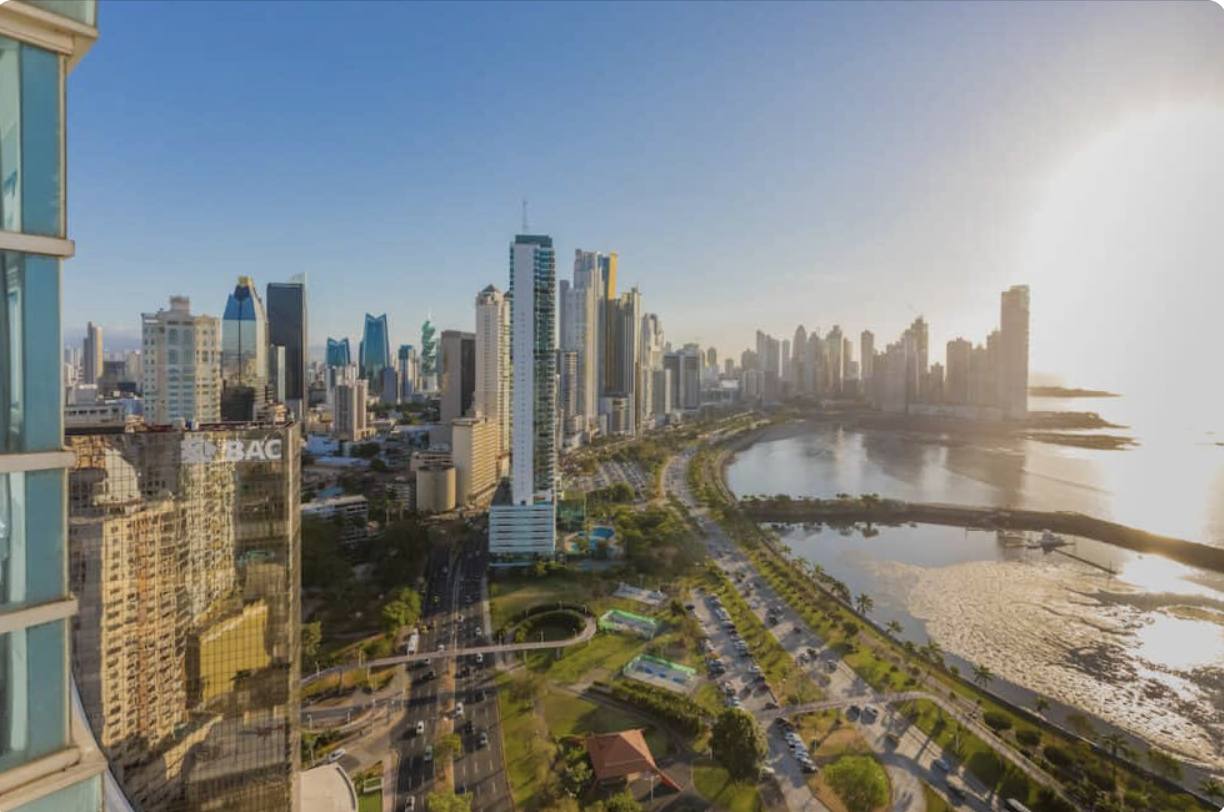
You lose the beaches. Barbados's west coast — Mullins Bay, Paynes Bay, the stretch from Holetown to Speightstown — is world-class in a way that is difficult to overstate. Panama City has a beautiful waterfront and a dramatic skyline, but the water in the urban core is not swimming water. The nearest good Pacific beaches are thirty to sixty minutes away at Coronado or Playa Blanca. Caribbean beaches on the San Blas islands or Bocas del Toro require a domestic flight. Clients from Barbados should plan for the ocean becoming a weekend activity rather than a daily presence.
You gain a city. A real one. Panama City has 1.5 million people, international restaurants, concert venues, professional sports, museums, and the kind of ambient energy that a small island cannot produce. For families with teenagers, for professionals who want to network beyond a single industry, for anyone who has felt the small-island ceiling, this is the draw.
You gain professional oxygen. Panama City is a regional hub — banking, logistics, legal services, consulting, real estate, and the operations of the Canal itself generate a professional ecosystem with actual breadth. Dual-career families find options here that Barbados simply cannot offer at scale.
You gain continental depth. Panama is a country you can explore for years. Drive an hour from the capital and you are in mountain towns. Fly forty-five minutes and you are in indigenous territories on the Caribbean coast. The Boquete highlands, six hours west, offer a cooler climate and a tight-knit expat community that some of our clients use as a weekend counterweight to the city.
How to think about the decision
We are not neutral observers — we are a Panama-based advisory and we want you to move here. But we also want you to stay once you arrive, which means being honest about the trade-offs before you commit. Of the Barbados clients we have worked with, a small number concluded after their exploration visit that Panama was not the right fit. We were glad they figured that out at the visit stage rather than after shipping a container.
The clients who have moved and stayed report, at the twelve- and twenty-four-month check-ins, that the biggest positive surprises were the healthcare access and the sheer scale of daily life in a real city. The biggest adjustments were Panama City traffic, the loss of beach-at-your-doorstep living, and the time it takes to build a social circle from scratch in a larger place. These are real costs. They are also costs that most of our clients, with some advance planning, have navigated well.
If you are at the stage of seriously considering this, the next step is a conversation — forty-five minutes, free, no follow-up unless you ask. If Panama turns out not to be the right move for you, we will say so directly.
Sources & further reading
- Numbeo — Panama City vs. Bridgetown cost comparison: numbeo.com
- Mercer Cost of Living Survey — annual rankings: mercer.com
- Joint Commission International — accredited organizations directory: jointcommissioninternational.org
- Servicio Nacional de Migracion de Panama — visa categories: migracion.gob.pa
- IMF country profile — Panama: imf.org/en/Countries/PAN
- World Bank country data — Panama: data.worldbank.org/country/panama
- NOAA National Hurricane Center climatology: nhc.noaa.gov/climo
- OECD tax centre: oecd.org/tax